
When you need to pull a heavy camper, a boat, or a flatbed trailer, a standard crossover just will not cut it. You need a vehicle built with real structural muscle, robust cooling systems, and specialized suspension to handle the extra weight.
Choosing the right rig requires looking beyond simple numbers on a spec sheet. Let’s break down exactly what makes a utility vehicle great for hauling and look at the absolute best SUVs for towing on the market today.
What Defines an SUV Built for Towing?
The Quick Definition: SUVs for towing are body-on-frame or reinforced unibody sport utility vehicles specifically engineered with the high torque, heavy-duty braking, and structural integrity required to safely pull a trailer behind them.
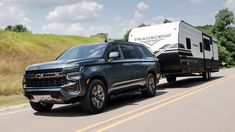
Unlike smaller passenger vehicles, these heavy-duty SUVs for Towing are designed to handle massive downward forces on the rear axle while maintaining steering control and stopping power. They often come equipped with integrated trailer brake controllers, heavy-duty cooling packages for the engine and transmission, and specialized driving modes that alter transmission shift points under heavy loads.
The Top 5 SUVs for Towing
The automotive landscape has changed dramatically. Manufacturers are trading old, inefficient engines for high-output twin-turbos and hybrid power plants that deliver incredible low-end torque. Here are the five best-performing large SUVs for Towing on the market right now, ranked by their maximum capabilities.
| SUV Model | Max Towing Capacity | Engine Type |
| Jeep Grand Wagoneer | 10,000 lbs | 3.0L Twin-Turbo Inline-6 |
| Ford Expedition | 9,600 lbs | 3.5L Twin-Turbo V6 |
| Toyota Sequoia | 9,500 lbs | 3.4L Twin-Turbo V6 Hybrid |
| Lexus GX 550 | 9,096 lbs | 3.4L Twin-Turbo V6 |
| Dodge Durango | 8,700 lbs | 5.7L V8 or 6.2L Supercharged V8 |
1. Jeep Grand Wagoneer (10,000 lbs)
The reigning heavyweight champion of the SUV world is the Jeep Grand Wagoneer. Swapping out old V8 engines for the modern “Hurricane” 3.0-liter twin-turbo inline-six, this luxury liner pulls up to 10,000 pounds with absolute ease. The linear power delivery of the inline-six makes pulling heavy loads up steep mountain grades feel incredibly smooth.
2. Ford Expedition (9,600 lbs)
Built on a rugged truck platform, the Ford Expedition uses a time-tested 3.5-liter EcoBoost twin-turbo V6 engine. When properly equipped with the Heavy-Duty Trailer Tow Package, it hits a massive 9,600-pound limit. It also features advanced backup assist technology that lets you steer the trailer with a simple dashboard knob.
3. Toyota Sequoia (9,500 lbs)
The Sequoia utilizes Toyota’s modern i-FORCE MAX platform, combining a twin-turbo V6 with a powerful electric motor integrated into the transmission. This setup pumps out 583 pound-feet of torque, allowing it to muscle through up to 9,500 pounds. Because it is a hybrid, you get immense low-end pulling power right from a dead stop.
4. Lexus GX 550 (9,096 lbs)
For those who want to combine luxury, overland off-roading, and serious trailering capability, the boxy Lexus GX 550 is a standout choice. It can pull up to 9,096 pounds in its rugged Overtrail trim. Shared platform engineering with full-size trucks gives this luxury vehicle a highly rigid frame that handles heavy tongue weights beautifully.
5. Dodge Durango (8,700 lbs)
If you prefer a mid-size footprint over a massive full-size footprint, the Dodge Durango punches way above its weight class. When paired with the 5.7-liter HEMI V8 and the specialized Tow ‘N Go package, this three-row SUV can manage a massive 8,700 pounds. It provides sports-car handling when unhooked, making it an excellent dual-purpose vehicle.
Real-World Insights: Lessons from the Road
Having spent thousands of miles hauling trailers across various terrain, I can tell you that a vehicle’s maximum rating is only half the story.
Why Torque Matters More Than Horsepower
When you are pulling an 8,000-pound travel trailer up a steep incline, horsepower does not save you—torque does. Low-end torque allows the vehicle to maintain highway speeds without forcing the transmission to constantly hunt for gears or scream at high engine revolutions. The modern twin-turbo and hybrid setups found in today’s best haulers provide peak torque low in the RPM range, which saves stress on the engine.
The Impact of Wheelbase Length
A longer wheelbase (the distance between the front and rear wheels) naturally provides a more stable towing experience. If you pull a long trailer with a short vehicle, the trailer can act like a lever, pushing the rear of the vehicle around during high winds or when semi-trucks pass you by. If you plan to tow long campers, opting for long-wheelbase versions like the Ford Expedition MAX or Jeep Grand Wagoneer L models offers vastly superior stability.
3 Critical Weights to Verify Before You Hitch Up
Overloading a sport utility vehicle is a major safety hazard that can cause brake failure, tire blowouts, or structural damage. Always locate the safety placard on your driver’s door frame to check these three limits:
- Payload Capacity: This is the total weight your vehicle can hold inside and on top. It includes all passengers, luggage, aftermarket gear, and the downward weight of the trailer hitch. Heavy tongue weight eats up payload capacity quickly.
- Tongue Weight: This is the physical downward force pushed onto your hitch ball by the trailer. For safe trailering, this must be between 10% and 15% of the total trailer weight. Too little tongue weight causes dangerous trailer sway; too much tongue weight lifts the front wheels of your vehicle, reducing steering control.
- Gross Combined Weight Rating (GCWR): The absolute maximum allowed total weight of your fully loaded vehicle and your fully loaded trailer combined.
Frequently Asked Questions (FAQs)
What happens if I exceed my SUV’s maximum towing capacity?
Exceeding the manufacturer’s limit compromises structural safety, strains the transmission, and severely overheats the brakes. It also significantly increases trailer sway, making it incredibly difficult to maintain steering control at highway speeds. Legally, overloading your vehicle can also void your insurance coverage in the event of an accident.
Do I need a special license to tow a camper with an SUV?
In most states and regions, a standard driver’s license is perfectly sufficient for consumer travel trailers and recreational boats. However, if your total combined weight (SUV + trailer) exceeds 26,000 pounds, certain states require a non-commercial Class A or B license. Always double-check your local DMV guidelines.
What is the difference between a factory tow package and an aftermarket hitch?
A factory tow package is installed by the manufacturer and includes upgraded engine cooling, heavy-duty alternators, trailer wiring harnesses, integrated brake controllers, and structural frame reinforcements. An aftermarket hitch is simply a metal receiver bolted to the rear bumper or frame, which does not automatically upgrade your vehicle’s mechanical cooling capacity.
Is an all-wheel-drive (AWD) SUV safe for hauling?
Yes, but four-wheel-drive (4WD) with a low-range transfer case is generally preferred for heavier loads. 4WD provides superior traction on slippery boat ramps, gravel inclines, and unpaved campsites where extra low-end torque distribution is required.
Conclusion
The market for high-capability haulers has never been stronger. Whether you prioritize the massive 10,000-pound strength of a premium luxury cruiser, the smart tech inside a truck-based platform, or the instant torque of a hybrid system, there is an ideal match for your needs. Always look closely at your payload limits and opt for the best SUVs for Towing to avoid issues.
If you are looking for more about SUVs for Towing, make sure to browse the expert guides over at the towing blogspot before you lock down your next big vehicle purchase.

Top 5 SUVs for Towing in 2026: Power, Safety, and Real Muscle