
There is nothing quite like the freedom of the open road on two wheels. But every rider eventually faces a situation where their bike needs a lift instead of a ride. Whether you have broken down on the side of the highway, bought a project bike that doesn’t run, or are transporting your track bike to a weekend race, knowing how to handle transport is essential.
Moving a motorcycle requires specialized care. Unlike a car, a bike cannot simply be hooked up to a standard tow truck without risking catastrophic structural or cosmetic damage.
What is Motorcycle Towing?
Motorcycle towing is the specialized process of transporting a two-wheeled vehicle using dedicated equipment—such as flatbed trailers, hitch carriers, or specialized wheel lifts—to ensure the bike remains upright, stable, and undamaged during transit.
When handling a bike, the primary goal is simple: eliminate any chance of it tipping over. Because motorcycles have a high center of gravity and only two contact points with the ground, traditional automotive towing methods will not work.
The 3 Best Methods for Transporting a Bike
Depending on your budget, your vehicle, and the distance you need to travel, you have three primary options for getting your bike from point A to point B.
1. Flatbed Trailers (The Gold Standard)
Using a flatbed trailer or a dedicated motorcycle trailer is the safest way to transport a bike over long distances. The motorcycle sits entirely on a flat surface, allowing you to compress the suspension slightly and secure it from multiple angles.
2. Hitch-Mounted Carriers
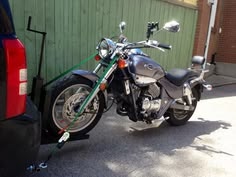
For dirt bikes, dual-sports, and lighter sportbikes, a hitch carrier is an excellent, compact option. This device slides directly into your vehicle’s Class III or IV receiver hitch. It allows you to haul the bike perpendicular to your vehicle without pulling a full trailer.
3. Motorcycle Tow Dollies (Wheel Lifts)
A tow dolly secures the front wheel of the motorcycle into a cradle attached to your car’s hitch, while the rear wheel remains on the pavement. While budget-friendly and easy to store, this method is best kept for short distances, as it can cause uneven tire wear and drivetrain friction if the chain or belt isn’t disconnected.
Step-by-Step: How to Secure a Bike Like a Pro
Over the years, I have seen far too many riders use cheap straps or incorrect anchor points, resulting in bent handlebars, cracked fairings, or worse—a bike sliding down the asphalt at highway speeds.
Here is the exact blueprint for securing a motorcycle for transport:
Step 1: Use a High-Quality Wheel Chock
Never rely solely on straps to keep a bike upright. A front wheel chock bolts or clamps down onto the trailer bed, locking the front wheel in place. This acts as your primary anchor point and keeps the front wheel from twisting.
Step 2: Choose the Right Tie-Downs
Throw away those cheap, flimsy hardware-store cambuckle straps. Invest in heavy-duty ratchet straps rated for at least double the weight of your motorcycle. Pair them with “soft loops” to wrap around your handlebars or triple trees so the metal hooks don’t scratch your paint or chrome.
Step 3: Compress the Front Suspension (But Not Too Much)
Attach your soft loops to a solid structural point, like the lower triple tree. Anchor the straps forward and outward at roughly a 45-degree angle. Tighten the ratchet straps evenly on both sides until the front forks are compressed about halfway.
Step 4: Secure the Rear End
The rear straps are meant to prevent the back of the bike from bouncing sideways. Attach them to the passenger footrest brackets or the swingarm, pulling forward and outward.
Critical Safety Mistakes to Avoid
Before you hit the road, double-check your setup against these common pitfalls:
- Leaving the Kickstand Down: This is a classic rookie mistake. If you leave the side stand down while ratcheting the bike down, a hard bump on the road can force the kickstand through the floorboards or crack the motorcycle’s frame. Keep the stand up; the straps and chock do the holding.
- Covering a Bike on an Open Trailer: It sounds like a good idea to protect your bike from bugs and rain, but highway winds will cause the cover to flap violently. This abrasive friction can completely ruin your clear coat and paintwork within an hour.
- Forgetting to Check Strap Tension: Ratchet straps can stretch, and a bike can settle after a few miles of driving. Always pull over after the first 10 to 15 miles to check the tension of your tie-downs.
When to Call a Professional Service
Sometimes, DIY isn’t an option. If you are stranded on a busy interstate at night, attempting to load a heavy touring bike onto a pickup truck bed by yourself is incredibly dangerous.
When calling for professional roadside assistance, always explicitly state that you need a motorcycle flatbed with a specialized cradle system. Standard tow operations might try to hook your bike up to a traditional wheel-lift truck, which can easily bend your forks or ruin your front braking rotors. Ensure the operator has experience handling two-wheeled vehicles.
Conclusion
Transporting a motorcycle doesn’t have to be a stressful experience. By selecting the right equipment, investing in premium tie-down straps, and taking your time during the loading process, you can ensure your pride and joy arrives at its destination without a single scratch.
If you ever find yourself in a pinch, want to read deep-dive equipment reviews, or need to locate certified haulers in your area, be sure to check out the expert resources available at towing blogspot to keep your gear safe on every journey.

Master Motorcycle Towing: A Practical Guide to Safely Moving Your Bike