
Imagine this scenario: You’re driving home after a long shift, the roads are quiet, and suddenly, your vehicle loses power. You coast onto the shoulder, turn on your hazard lights, and realize you are stranded. After a quick moment of frustration, your very next thought is almost always financial: How much is this going to cost me? No one puts a “tow truck fund” into their monthly budget. When a breakdown happens, it is an unexpected expense that can throw off your entire week. Naturally, your first instinct is to open your phone and search for cheap towing.
However, a common fear among drivers is that opting for a budget-friendly service means sacrificing quality. Will the truck take three hours to arrive? Will the driver be careless with your vehicle? The good news is that you do not have to choose between a fair price and professional service. This comprehensive guide will show you how to secure reliable, cheap towing without putting your vehicle or your safety at risk.
Why Cheap Towing Doesn’t Have to Mean Low Quality
There is a major misconception that a low price tag equals a terrible experience. In the highly competitive automotive service industry, many local companies offer cheap towing simply as a smart business strategy to keep their trucks moving and build long-term loyalty with local drivers.
When a company optimizes its routes, maintains a modern fleet, and manages its overhead efficiently, it can pass those savings directly on to you. Affordable rates do not inherently mean the company is cutting corners on safety equipment or hiring untrained drivers. It often just means you have found a business that values fair pricing and volume over price-gouging stranded motorists.
What to Look For in an Affordable Towing Company
When you are stranded on the side of the highway, you might be tempted to call the very first number you see. Taking just two minutes to vet the company can save you hundreds of dollars and hours of frustration. Here is what to look for:
1. Transparent, Upfront Estimates
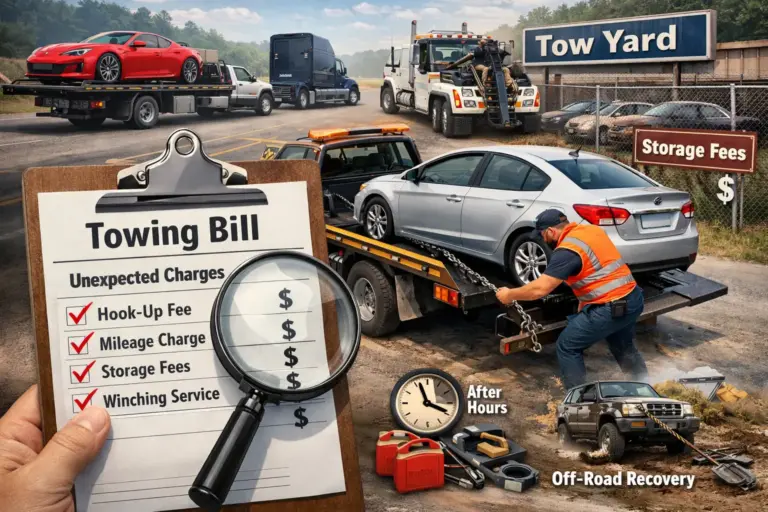
The biggest risk of searching for low-cost roadside assistance is falling victim to hidden fees. A predatory company might quote you a remarkably low price over the phone, only to tack on astronomical “gate fees,” “hook-up fees,” or “special mileage rates” once your car is secured on their truck.
A reputable provider of cheap towing will always practice transparent pricing. When you call, they should be able to break down the base rate and the per-mile cost clearly before dispatching a driver. If a dispatcher avoids giving you a straight answer about the total estimated cost, hang up and call someone else.
2. Comprehensive Licensing and Insurance
“Cheap” should never mean illegal. No matter how desperate you are to save a dollar, never hire an unlicensed or uninsured tow operator.
If an uninsured company damages your bumper, transmission, or drivetrain during the loading process, you will have zero legal recourse to get them to pay for the repairs. True professionals carry comprehensive liability insurance to protect your asset from the moment it is hooked up to the moment it is dropped off at the mechanic.
3. Around-the-Clock 24/7 Availability
Vehicle emergencies do not respect standard business hours. If your car breaks down at 2:00 AM on a Sunday, you shouldn’t be penalized with massive nighttime surcharges. Look for a local business that advertises 24/7 emergency service at standard, competitive rates. A reliable network ensures that cheap towing is available to you whether it is high noon or the middle of the night.
Red Flags to Avoid When Booking Cheap Towing
While searching for the best deal, keep your eyes open for these warning signs that a budget company might cost you more in the long run:
- Unmarked Trucks: If a tow truck arrives and has no company logo, phone number, or USDOT number printed on the side, be incredibly cautious.
- Cash-Only Demands: While many companies accept cash, a strict “cash-only” policy right from the start often indicates they are trying to avoid a paper trail or digital receipts.
- Vague ETA (Estimated Time of Arrival): If they tell you “we will get there when we get there,” they likely do not have a localized fleet and your vehicle will be sitting exposed on the roadside for hours.
Alternatives to a Full Tow: Roadside Assistance
Sometimes, the best way to secure cheap towing is to avoid the actual tow altogether. Many drivers assume their car needs to go to a mechanic when the issue is actually a quick fix. When calling for assistance, ask if the company provides roadside services that can get you moving on your own four wheels:
- Battery Jump Starts: If your engine is clicking, a quick boost can save you the cost of a flatbed ride.
- Flat Tire Changes: If you have a spare but lack the tools or safety clearance to change it on a busy highway, a technician can swap it out quickly.
- Car Lockout Services: Trapping your keys inside the cabin is embarrassing, but a professional locksmith or tow driver can bypass the lock without damaging your door frame.
- Fuel Delivery: Running out of gas happens to everyone. Having a few gallons delivered directly to your location is vastly cheaper than paying for a multi-mile haul to the nearest service station.
Frequently Asked Questions About Cheap Towing
How much does a standard tow usually cost?
While average towing cost vary significantly based on your geographic location, a standard local tow typically consists of a base hook-up fee ranging from $50 to $100, plus a mileage fee ranging from $2 to $5 per mile. Companies specializing in cheap towing often offer lower base rates or include the first few miles in their initial hook-up package.
Does insurance cover budget towing services?
Yes, in many cases. If you have roadside assistance coverage added to your comprehensive auto insurance policy, your provider will either cover the cost directly or reimburse you up to a certain dollar limit. Always ask the towing company for an official digital or physical receipt so you can submit it to your insurance agent.
Will a cheap towing service damage my all-wheel-drive (AWD) vehicle?
Not if they use the correct equipment. AWD vehicles must be transported using a flatbed truck rather than a traditional wheel-lift hook, as dragging the wheels can destroy the drivetrain. Professional budget towing operations maintain diverse fleets, including flatbeds, to ensure your car is transported safely according to its manufacturer specifications.
Why do rates change for heavy-duty vehicles?
Heavy-duty vehicles like pickup trucks, large SUVs, commercial vans, and RVs require larger, specialized tow trucks and more rigging time. While you can still find highly competitive and cheap towing rates for these vehicles, the baseline cost will naturally be higher than transporting a compact sedan.
Conclusion
Getting stranded on the roadside is stressful enough without the added anxiety of an outrageous service bill. Finding cheap towing that doesn’t sacrifice quality is entirely possible if you know what to look for. By prioritizing upfront pricing transparency, verifying licensing and insurance, and keeping an eye out for hidden fees, you can protect both your vehicle and your wallet.
The absolute best way to handle a roadside emergency is to be prepared before it happens. Don’t wait until you are stuck on a dark highway shoulder to start researching your options.


How to Find Cheap Towing Without Sacrificing Quality: A Driver’s Guide